You’ve probably noticed this shift.
Walk into any college event, office celebration, or wedding function — and you’ll see more cotton sarees than polyester shine. It’s not random. It’s intentional.
Young women are consciously choosing cotton sarees over synthetic fabrics. And no, it’s not just about “tradition.” It’s about comfort, identity, sustainability, and smart fashion decisions.
This change has been evident over the last 2 to 3 years, especially among women in cities like Hyderabad, Bangalore, and Mumbai. The preference is clear.
Let’s break it down properly.
Comfort Matters More Than Gloss
Cotton sarees breathe. Synthetic fabrics trap heat. That’s the reality.
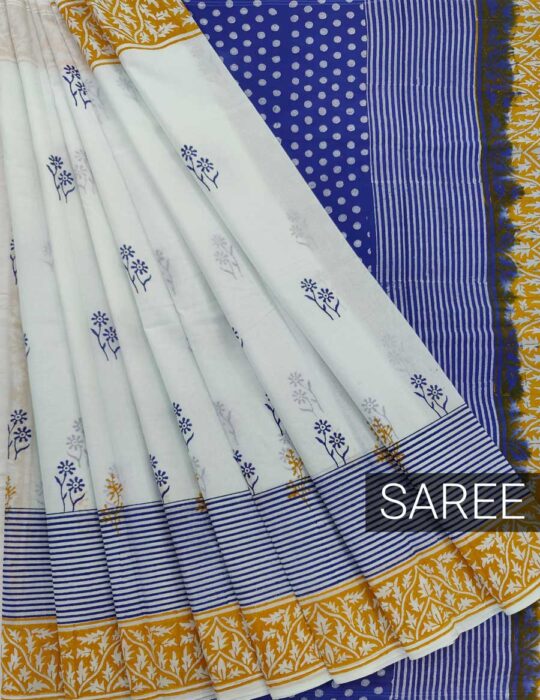
In Indian weather where temperatures easily cross 35°C, wearing polyester for 6 to 8 hours becomes exhausting. Young women are prioritising comfort over artificial shine. Cotton absorbs sweat. It allows air circulation. You can wear it for an entire workday and still feel fresh. That makes a difference. Modern cotton sarees now come in hand-block prints, digital prints, and pastel palettes that look elegant without being loud. People switch to cotton simply because they are tired of feeling uncomfortable in synthetic sarees during long events.
Comfort is not boring. Comfort is confidence.
Related: Cotton Silk Sarees vs Pure Cotton Sarees – Which Should You Choose?
Sustainability Is No Longer Optional
This generation is environmentally aware. Young women today actually read fabric labels. They care about where their clothes come from and how they are made. Synthetic fabrics are petroleum-based. They release microplastics. They don’t decompose easily. Cotton, especially handloom cotton, is biodegradable and more eco-friendly. When you choose cotton sarees, you are indirectly supporting local weavers and traditional craftsmanship. That matters.
Boutique owners who say customers now ask about “organic cotton” or “handloom certification” before buying.
That shift did not exist 5 years ago. You need to understand — sustainability is becoming part of personal identity. It’s not just fashion. And you don’t have to become an activist to make a better choice. Start with your wardrobe.
Minimalism Is the New Luxury
Glossy synthetic sarees were once considered “rich.”
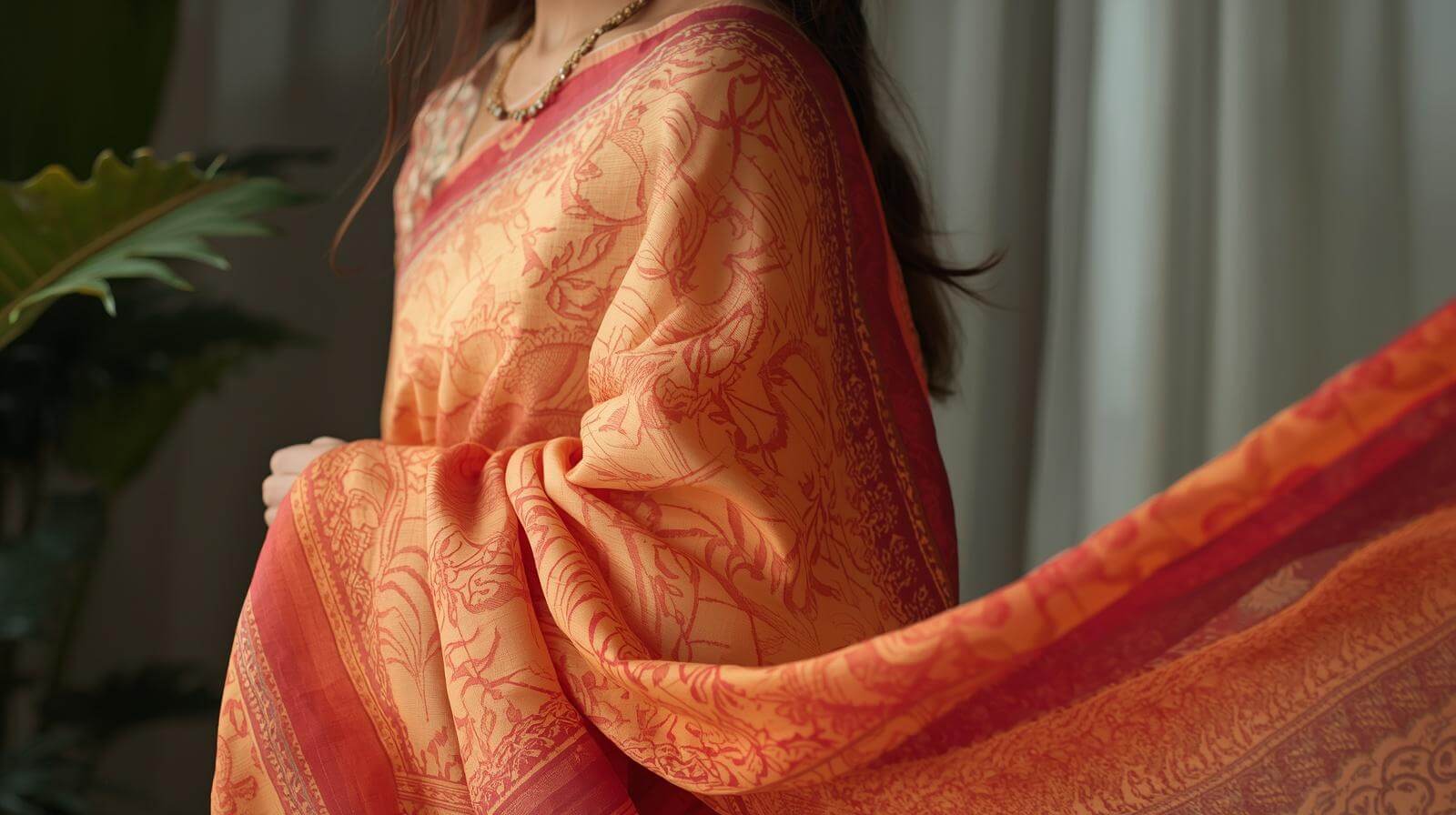
But today, subtle elegance is dominating. Young women are moving toward minimalism — neutral shades, earthy tones, breathable textures. Cotton fits perfectly into that aesthetic. It photographs beautifully. It works for office wear. It works for festive styling with the right blouse. It adapts. One cotton saree can be styled in 3 to 4 different ways. Change the blouse. Add oxidised jewellery. Wear sneakers or heels. Synthetic fabrics often look repetitive and overly shiny in daylight photography. Cotton gives depth without glare.
Influencers and working professionals consciously choose cotton for that reason alone.
It’s effortless style. And effortless always wins in the long run.
You may also like reading: Why Local Cotton Saree Stores Offer Better Quality Than Online Marketplaces
Skin-Friendly and Health-Conscious Choices
Here’s something most people don’t talk about.
Synthetic fabrics can cause skin irritation, especially in humid climates. Rashes, itching, discomfort — it happens more than you think.
Cotton is hypoallergenic.
It’s gentle on sensitive skin. It reduces friction. It absorbs moisture naturally. Young women today are more health-aware. They check ingredients in skincare. They avoid harsh chemicals. Why wouldn’t they care about fabric touching their skin for 8 to 10 hours? People shift to cotton after one bad experience with synthetic irritation during a long wedding function.
You don’t need 10 reasons. Sometimes, one bad day is enough.
Economic and Long-Term Value
Let’s talk practically. High-quality synthetic sarees may look shiny initially. But after 2 to 3 washes, the shine fades. Threads loosen. Fabric loses fall. Good cotton sarees, especially handloom ones, last for years. They soften over time instead of deteriorating. That’s long-term value. A quality cotton saree can serve you for 5 to 7 years with proper care. That’s smart buying. Young women are becoming financially aware. They calculate the cost per wear. If a saree costs ₹3,000 and you wear it 15 times, that’s ₹200 per wear. Make sure you think like that.
Fashion is emotional. But buying decisions can still be intelligent.
Conclusion: It’s a Conscious Shift, Not a Trend
Young women are not randomly choosing cotton sarees. They are choosing comfort. Sustainability. Skin safety. Minimal elegance. Long-term value. This shift has happened gradually over the last 2 to 3 years — and it’s growing stronger. You don’t have to follow trends blindly. But if you’ve been thinking about switching to cotton, maybe this is your sign.
Start with one. Wear it confidently. See how you feel.
You may also like reading our related articles: