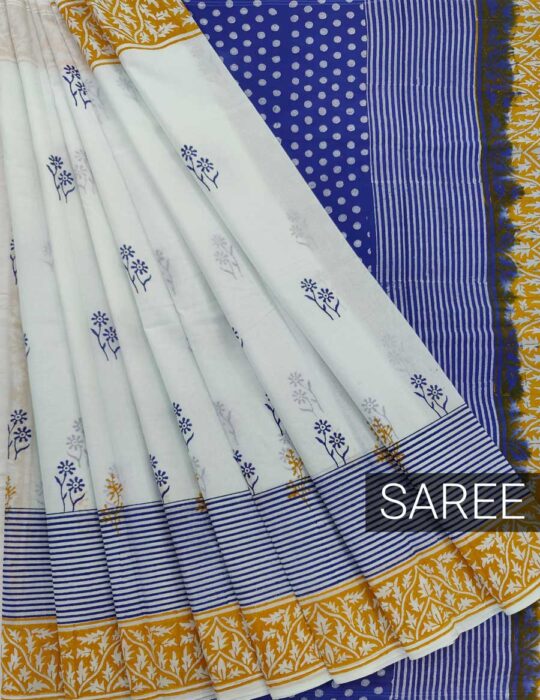
If you’ve ever compared prices, you’ve probably paused and thought why is a simple cotton mulmul saree more expensive than a shiny, fancy saree? Isn’t it?
Many people assume “more work” or “more design” means a higher price. But in sarees, that logic doesn’t always apply. Cotton mulmul sarees follow a completely different value system. Let me break it down for you step by step, so you can make a confident decision next time.
What Exactly Is a Cotton Mulmul Saree?
Cotton mulmul is not regular cotton. You need to understand this first.
Mulmul is an ultra-fine, breathable cotton fabric traditionally woven in India. It’s lightweight, soft, and airy, often compared to “woven air.” That softness doesn’t come easily.
To make mulmul, you need high-grade cotton fibers, slow weaving, and controlled tension. This process alone takes 2 to 3 times longer than making fancy saree fabric.
Don’t worry, simplicity here is intentional, not cheap.
Fabric Quality: Natural vs Artificial
This is where most price confusion starts.
Fancy sarees usually use synthetic fibers, such as polyester, nylon, or blended yarns. These are factory-made, mass-produced, and cost-effective. One roll can be made in hours. Cotton mulmul is made from natural cotton, often combed, refined, and softened through repeated processes. You need to make sure the fiber remains breathable and skin-safe.
The Weaving Process Is Slow and Skilled
Here’s something most buyers don’t see.
Mulmul sarees are often handwoven or semi-handwoven. That means skilled artisans, not automated machines. Each saree requires careful thread alignment to maintain softness and evenness.
Fancy sarees? Mostly power looms. Fast output. Minimal manual involvement. One mulmul saree can take 3 to 5 days. A fancy saree can be produced in under 3 hours. The math explains the price difference clearly.
Comfort Has a Cost (Especially in Indian Weather)
You need to factor in wearability.
Cotton mulmul sarees are designed for Indian climate conditions — humidity, heat, and long wear hours. They absorb sweat, allow airflow, and stay gentle on skin. Fancy sarees may look attractive, but trap heat. After 2 to 3 hours, discomfort starts. Comfort is an invisible value, but you pay for it upfront.
Also, read: Why Mulmul Cotton Is Best for Everyday Comfort
Durability and Long-Term Value
Here’s a reality check.
A good cotton mulmul saree can last 8 to 10 years with proper care. The fabric ages gracefully. It becomes softer over time, not weaker.
Fancy sarees often lose shine, crack, or stretch within 1 to 2 years. Synthetic fibers don’t improve with age.
One quality piece is always better than five replacements
Dyeing, Finishing, and Skin Safety
Another hidden factor.
Mulmul sarees usually use azo-free or natural dyes. The finishing process focuses on softness, not shine. This requires multiple wash cycles and manual inspection. Fancy sarees use chemical dyes and quick-finish coatings to enhance gloss. It looks appealing, but reduces fabric life and skin comfort. If you have sensitive skin, you already know why this matters.
Common Misunderstandings You Should Avoid
- A simple look does not mean cheap production
- Heavy embroidery does not mean higher fabric quality
- Shine does not equal durability
- Lower price today often means higher cost later
Make sure you don’t judge sarees only by appearance.
Final Thoughts
So yes — cotton mulmul sarees are more expensive than fancy sarees. And now you know why. You’re paying for fabric purity, skilled labor, comfort, durability, and climate suitability. Not just looks. It’s really ok to invest in something that serves you for years instead of seasons.
You may also like: