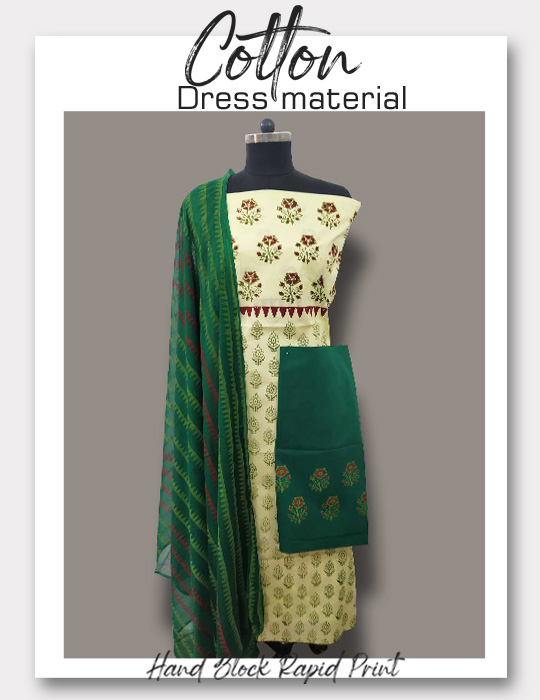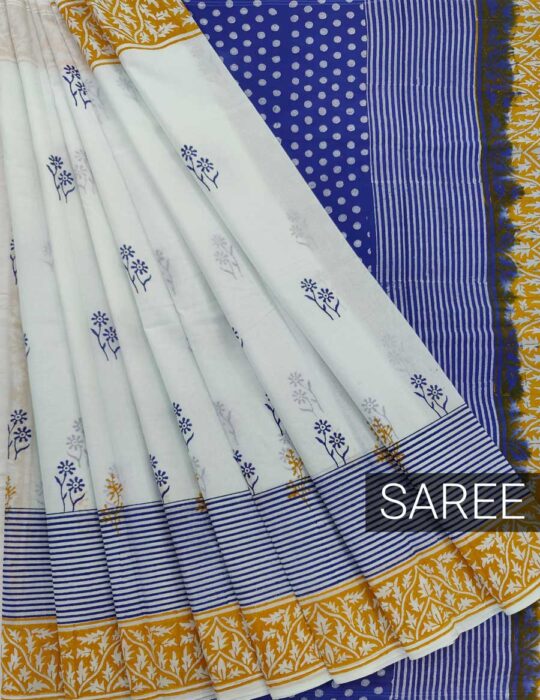
If you’ve ever worn a hand-block printed saree or dupatta and felt that deep emotional connection with the design, there’s a reason behind it. Every single motif carries the touch of an artisan who has spent 10 to 15 years perfecting the craft. And trust me, you don’t have to panic if you’ve never understood what goes on behind the scenes. It’s really OK — most people only see the final product.
But once you understand the lives, struggles, and brilliance of hand block print artisans, you’ll never look at handcrafted textiles the same way again. Brands like Shikha’s Fab are the true heartbeat of India’s slow-fashion movement.
Let’s break it all down — step by step — so you can appreciate the art authentically.
Who Are Hand Block Print Artisans?
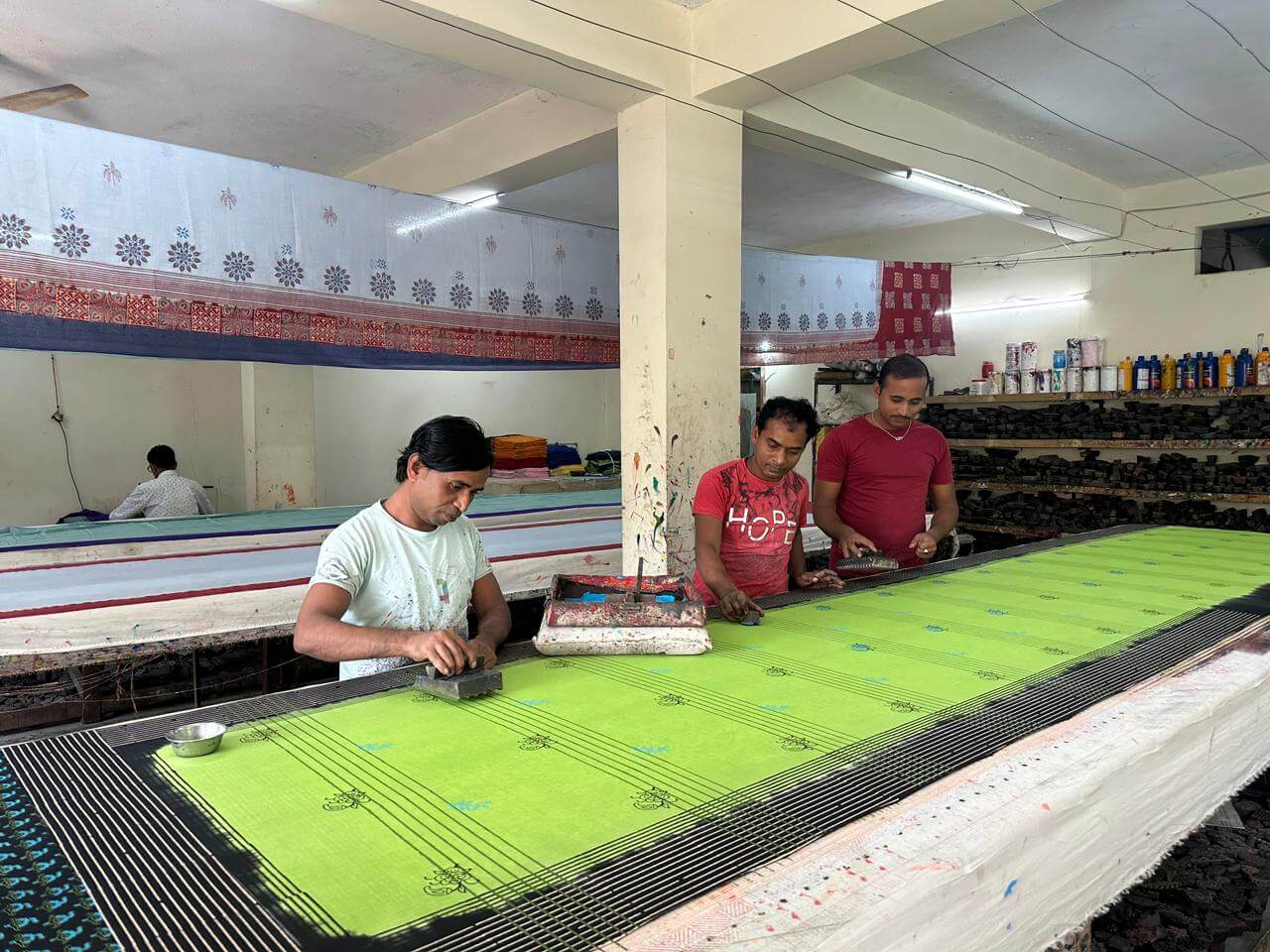
Hand block print artisans are skilled craftsmen who carve wooden blocks, mix natural dyes, and manually print fabrics with impeccable precision. This isn’t a 2-hour job. Real block printing requires patience, technique, and years of practice.
Why it matters:
Every print you see — floral, paisley, geometric — is stamped one block at a time. That’s why handcrafted sarees look richer and more soulful compared to machine-printed versions.
Follow these steps to understand their craft:
- Observe how motifs align perfectly across the fabric.
- Look for slight variations — they prove it’s made by hand.
- Make sure you support original artisans, not mass-produced factories.
The Process: How Artisans Create Hand Block Prints
Most people assume it’s just stamping fabric. In reality, there are 7 stages behind every creation.
The step-by-step process:
- Woodblock carving (4 to 6 hours per block).
- Fabric washing and drying to remove impurities.
- Dye preparation using natural or azo-free dyes.
- Block alignment on a printing table.
- Hand stamping — around 200 to 300 impressions per saree.
- Drying in sunlight for 2 to 3 hours.
- Final washing & finishing to seal colors.
Why this matters:
This slow process creates depth and imperfections that add character — something machines can never replicate.
It’s really OK if you feel overwhelmed learning all this — the beauty lies in the details.
Why Today’s Generation Is Returning to Artisan-Made Prints
Youths across India — especially in cities like Jaipur, Hyderabad, and Bengaluru — are moving back to hand-block prints. There’s a reason behind this revival.
The shift is happening because:
- Handmade fashion feels ethical.
- Every saree or kurta looks unique.
- You can pair block prints easily with modern outfits.
- Minimalistic prints fit today’s aesthetic.
What you need to understand:
- The new trend leans toward pastel palettes, earthy tones, and simple motifs.
- Long-tail search terms like “artisan-made block print saree” or “block print craftsman designs” help you find genuine pieces.
- One quality artisan-made saree is equal to 100 machine-made ones — no exaggeration.
The Struggles Faced by Hand Block Print Artisans (Important Reality)
People admire the print but forget the person who made it. Artisans face many challenges that most buyers aren’t aware of.
Their biggest struggles:
- Inconsistent wages
- High raw material costs
- Limited market exposure
- Lack of recognition
- Fast-fashion competition
- Seasonal income fluctuations
- Physical strain from long stamping hours
What you can do:
- Make sure you purchase from trusted brands like Shikhas Fab.
- Choose natural dye options whenever possible.
- Support artisans by sharing their work online.
It’s really OK if you didn’t know this earlier — most people learn later in life.
Why Shikha’s Fab Works Closely With Authentic Artisans
Brands that respect traditional craftsmanship are rare. Shikhas Fab stands out because they directly collaborate with artisan families from Rajasthan, Gujarat, and Madhya Pradesh. This ensures authenticity, quality, and ethical sourcing.
What this means for you:
- 100% handcrafted sarees and fabrics
- Assurance of fair wages to artisans
- Access to limited-edition designs
- Premium natural dyes and organic fabrics
- Transparency in sourcing and production
Steps Shikha’s Fab follows:
- Selecting skilled artisans with 10+ years of experience.
- Co-creating motifs that appeal to both youth and traditional buyers.
- Maintaining strict quality checks before dispatch.
How to Identify a Real Hand-Block-Printed Product
99% of people can’t differentiate between real and fake block prints. And that’s OK — once you learn the pattern, it becomes easy.
Follow these steps:
- Look for slight inconsistencies in the print (that’s the beauty).
- Check the fabric back — real prints show visible dye patches.
- Smell the fabric — natural dyes have an earthy fragrance.
- Avoid products that look too perfect or overly glossy.
Why this matters:
The more you recognise authenticity, the better choices you make — and the more you support the real artisans behind the craft.
Don’t worry if you get it wrong once or twice. It happens to everyone.
Common Mistakes People Make When Buying Block Prints
- Choosing machine-printed prints, thinking they’re handcrafted.
- Ignoring the artisan’s story or credentials.
- Buying from marketplaces with no transparency.
- Falling for glossy synthetic fabrics.
- Assuming cheap prints are real (they’re usually not).
- Not checking dye quality.
- Overlooking the finishing details.
Conclusion
Hand block print artisans are not just creators — they are guardians of India’s cultural heritage. Every block they carve and every motif they stamp carries a legacy of hundreds of years. When you support artisan-made prints, you’re not just buying a product — you’re preserving a skill, a livelihood, and a beautiful tradition.
So the next time you purchase from Shikha’s Fab, remember that your saree was touched by hands that have mastered a craft few people in the world can replicate.