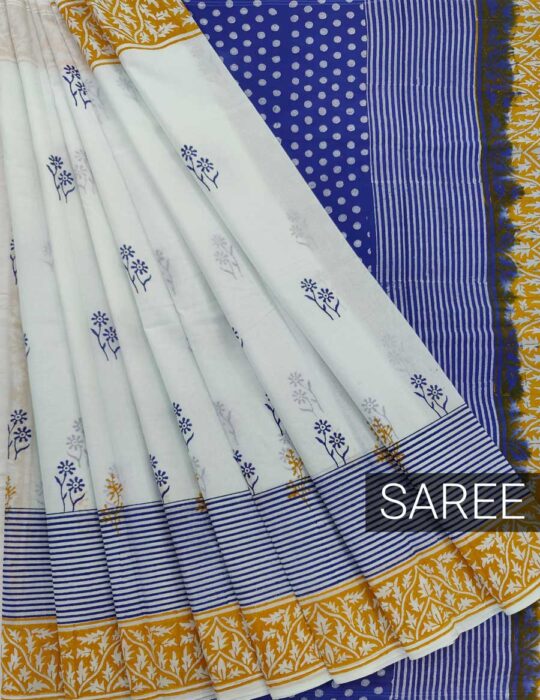
You are standing in a store, or maybe scrolling through an online shop. You see two beautiful sarees. One is hand block printed—you can almost feel the artisan’s hand in the uneven motifs. The other is digitally printed—crisp, perfect, photorealistic. Both claim to be sustainable. Both have tags that say “eco-friendly.”
So which one do you choose?
Many might have stood in that exact spot, confused, wanting to make the right choice but not knowing what “right” really means.
And here is what you can learn.
Sustainability is not a label. It is not a buzzword. It is the sum of every choice made along the way—the dye, the water, the energy, the waste, and the human hands behind it. Both hand block and digital printing can be sustainable. Both can also be destructive. The difference lies in how they are done.
Read this guide till the end. It won’t take much of your time, but by the time you finish, you will know exactly which one deserves your money.
What Is Hand Block Printing, Really?
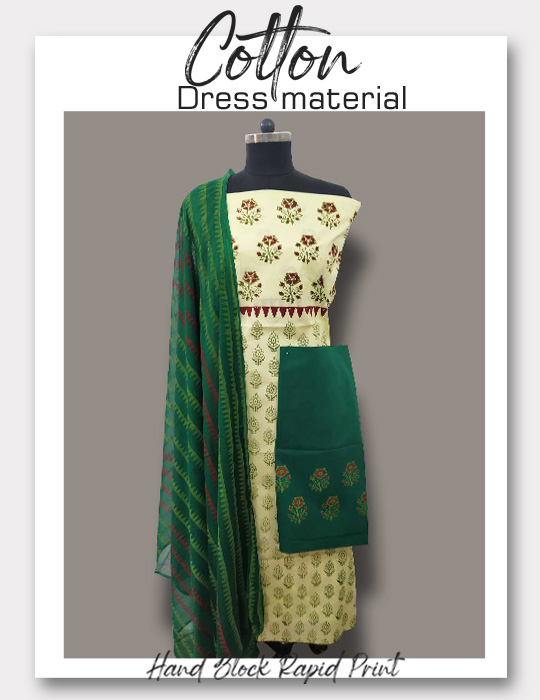
Hand block printing is one of the oldest textile arts in the world. In India, it has been practiced for over two thousand years. Artisans carve intricate designs into wooden blocks—usually teak or sheesham—dip them into dyes, and stamp them onto fabric by hand. Some designs require over a thousand impressions for a single piece of fabric.
It is slow. It is labour‑intensive. It is human.
And that is precisely its beauty—and its challenge.
The Sustainability Case for Hand Block Printing
Here is what makes hand block printing genuinely sustainable.
Minimal Electricity, Low Carbon Footprint. The printing stage itself requires no electricity. Blocks are carved by hand. Fabric is dried in the sun. Compared to machine‑based methods, the carbon footprint is dramatically lower. Some studies suggest hand block-printed textiles can have up to 70% lower impact on the environment and human health compared to industrial alternatives.
Natural Dyes, Biodegradable. Traditional block printing relies on dyes from plants—indigo, madder root, turmeric, and pomegranate. These are non‑toxic, biodegradable, and safe for both artisans and wearers. They do not release the hazardous chemicals found in synthetic dyes.
Minimal Waste. Block printing generates very little excess dye or fabric waste. The wooden blocks can last for decades with proper care. Every piece is made to order, not in bulk, which means less overproduction.
Preserving Livelihoods. When you buy hand block printed fabric, you are directly supporting artisan communities—often in rural areas where alternative employment is scarce. You are keeping a 450‑year‑old tradition alive. That is social sustainability, and it matters just as much as the environmental kind.
What Is Digital Textile Printing?
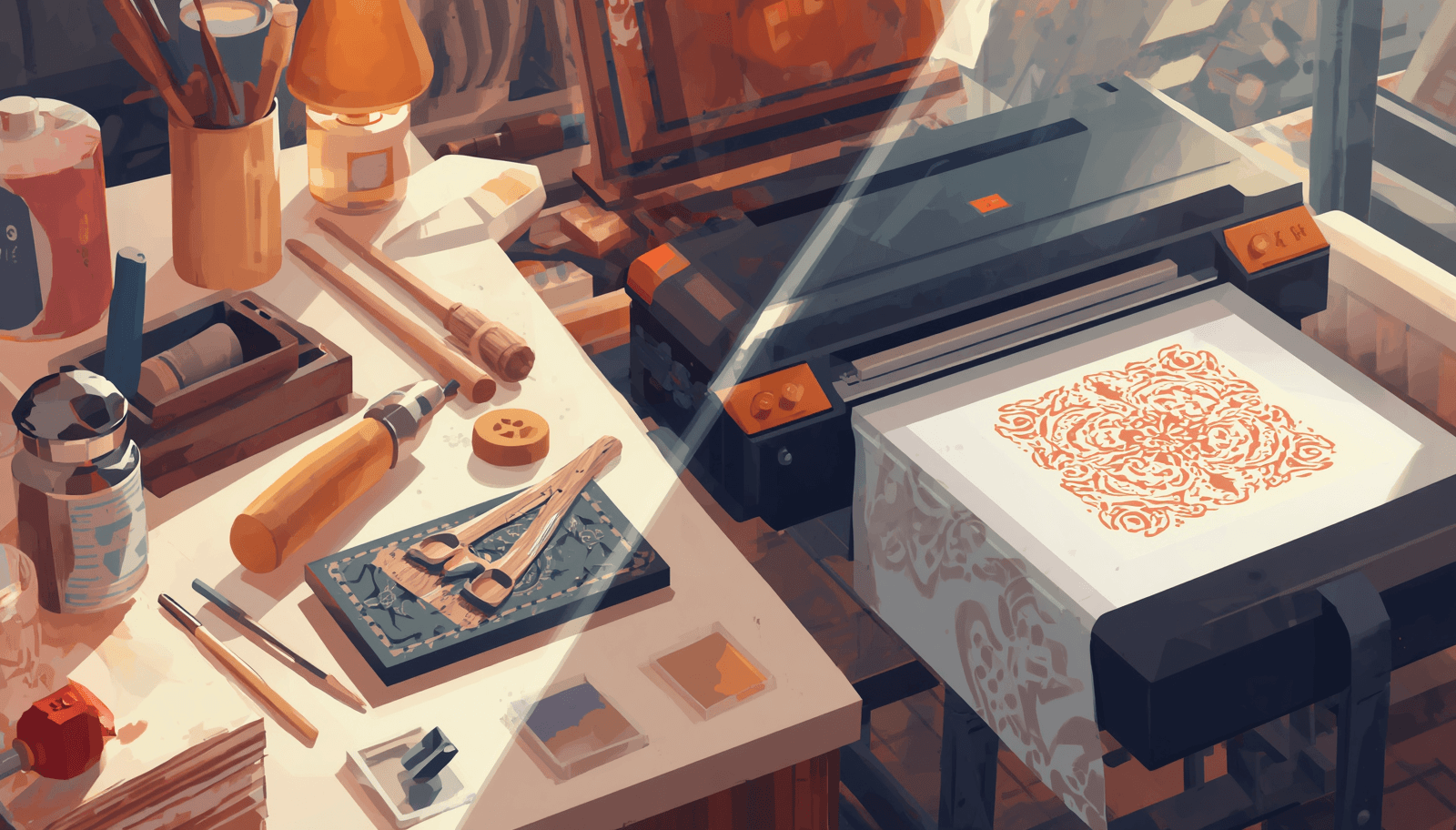
Digital printing uses inkjet technology to print high‑resolution designs directly from a computer onto fabric. No blocks. No screens. No lengthy setup. It allows unlimited colours, photorealistic patterns, and rapid production.
It is fast. It is precise. It is modern.
And it has its own sustainability story.
The Sustainability Case for Digital Printing
Digital printing is often hailed as the more sustainable option—and for good reason.
Up to 90% Less Water. Traditional printing methods use enormous amounts of water for washing screens, dye baths, and pre‑treatment. Digital printing can reduce water consumption by up to 90% or even 97% in some cases. Some newer technologies are almost entirely waterless.
Lower Energy Consumption. Digital printing consumes up to 57% less energy than traditional methods. It eliminates many energy‑intensive steps like screen preparation and post‑processing washing.
Reduced Waste. Digital printing produces exactly what is needed—no leftover screens, no excess ink, no overstock. It enables on‑demand production, which drastically reduces the waste generated by fast fashion’s overproduction problem.
Non‑Toxic Inks. Many digital printers now use water‑based pigment inks that are free from hazardous chemicals.
So Which One Is Truly Sustainable?
Here is the honest answer. Both can be sustainable. Both can be unsustainable.
Hand block printing is sustainable when it uses natural dyes, minimal water, and fair labour practices. When it uses chemical dyes and unregulated waste disposal, it is not.
Digital printing is sustainable when it uses pigment‑based inks, on‑demand production, and renewable energy. When it relies on energy‑intensive processes and non‑biodegradable inks, it is not.
Why Hand-Block Still Wins in My Heart
Digital printing is efficient. It saves water. It reduces waste. But it also runs on servers, software, and electricity grids. Its supply chain is complex—inks from one country, machinery from another, fabric from a third. When something breaks, it is not repaired; it is replaced. And the artisan? In digital printing, there is none. The artisan has been replaced by a printer.
Hand-block printing, on the other hand, is human from start to finish. It uses no electricity during the actual printing. It creates no e‑waste. It leaves behind no toxic electronic residue. And most importantly, it feeds families. It keeps villages alive. It passes down skills that have survived centuries.
When you choose hand-block, you are not just choosing a fabric. You are choosing to say: I value the hand over the machine. I value the imperfect over the flawless. I value the person over the process.
You may also like reading:
The Ultimate Guide to Pairing Jewelry with Your Cotton Block Print Saree
The 2026 Saree Care Guide: Keeping Your Cotton & Hand-Block Prints Vibrant for Years